You've been dreaming about that perfect Hawaiian beach day—your kids building sandcastles while turquoise waves lap at the shore, maybe even catching their first waves on safe surfing beaches Hawaii kids can actually enjoy. But when you start planning, the reality hits: Which state park beach is safest for beginners? What time should you arrive? How do you pack for a full day without forgetting essentials or hauling unnecessary gear? At Hawai'i State Parks, we've guided hundreds of families like yours through this exact challenge, turning overwhelming options into seamless beach experiences where every detail—from surf lessons to sunset timing—fits your schedule and budget.
This comprehensive guide walks you through creating your first Hawaii state park beach day itinerary, step by step. We'll cover everything from choosing the right beach and timing your arrival to sequencing activities so your family maximizes fun while staying safe and within budget. By the end, you'll have a proven framework that removes the guesswork and lets you focus on what matters: making memories with your ohana.
Step 1: Choose Your State Park Beach Based on Your Family's Skill Level
Not all Hawaiian beaches are created equal, especially when you're traveling with children who want to surf. The first critical decision is selecting a state park beach that matches your family's experience level and interests. At Hawai'i State Parks, we've mapped out which beaches offer the safest conditions for different age groups and activities.
For families seeking safe surfing beaches Hawaii kids can learn on, we consistently recommend beaches with gentle shore breaks, sandy bottoms, and lifeguard stations. Poipu Beach Park on Kauai features a protected cove where waves break softly over sand—perfect for first-time surfers ages 6-12. The water depth gradually increases, giving parents peace of mind while kids gain confidence. On Oahu, Kalama Beach Park in Kailua offers consistent small waves (typically 1-3 feet) with minimal rocks and a wide sandy beach for breaks between surf sessions.
If your family includes younger children (under 6) or non-swimmers, prioritize beaches with tide pools and calm lagoons. Lydgate Beach Park on Kauai features two rock-walled pools that create protected swimming areas where toddlers can splash safely while older siblings explore shallow reef ecosystems. This setup allows you to accommodate different comfort levels within one location—a key consideration when planning for families with wide age ranges.
Budget consideration: State park beach access is typically free or requires minimal parking fees ($5-10), making them significantly more affordable than private resort beaches. Factor in $20-30 per person for surf lesson rentals if you're booking instruction, or $15-25 for board rentals if you're teaching your own kids.
Creating Your Beach Selection Checklist
Before finalizing your beach choice, verify these essential factors we use in our custom itineraries:
- Lifeguard presence: Confirm daily coverage hours (usually 9am-5pm at major state parks)
- Amenity access: Restrooms, outdoor showers, and covered pavilions for shade breaks
- Parking capacity: Arrive before 9am or after 2pm to avoid full lots at popular beaches
- Wave conditions: Check surf forecasts the day before—look for waves under 3 feet for beginner surfers
- Proximity to other activities: Consider beaches within 15 minutes of hiking trails or cultural sites for afternoon alternatives
Step 2: Master the Timing—Your Hour-by-Hour Beach Day Framework
Timing can make or break your beach experience. After years of coordinating family beach days across Hawaiian state parks, we've developed an optimal schedule that balances energy levels, sun exposure, crowd management, and tide conditions.
7:00-7:30am: Departure from Accommodation
Beat the crowds and secure prime parking and pavilion space. Early arrival also means cooler temperatures for setting up camp and less intense UV exposure during your initial beach time. Pack the car the night before to streamline your morning.
8:00-10:00am: Prime Surfing Window
This is your golden window for safe surfing beaches Hawaii kids can enjoy at their best. Morning winds are typically calmer (under 10mph), creating cleaner wave faces that are easier to read and ride. Water temperatures are coolest, which keeps kids energized. If you're booking a surf lesson through our recommended local instructors, request this time slot—they're less rushed and can provide more individualized attention before midday crowds arrive.
10:00-10:30am: Snack Break and Regroup
After two hours of activity, kids need fuel and rest. This is when you'll appreciate having a claimed pavilion or pop-up canopy. Hydrate heavily—Hawaii's humidity causes faster dehydration than mainland beaches. Apply second-round sunscreen during this break.
10:30am-12:00pm: Free Play and Exploration
Let kids direct their own activities: sandcastle building, tide pool exploration, or boogie boarding in the shallows. Parents can rotate between active supervision and relaxation. This unstructured time is crucial—over-scheduling beach days leads to meltdowns.
12:00-1:00pm: Lunch in the Shade
UV intensity peaks between noon and 2pm. Retreat to covered areas for a substantial lunch. Many state park beaches have pavilions with picnic tables—claim yours early. This is also when you'll notice the biggest crowd influx as late arrivals compete for space.
1:00-2:30pm: Quiet Time Activities
Younger children may nap in portable beach tents. Older kids can read, play beach games in the shade, or join parents for a gentle wade in the water. Avoid intense sun exposure during these peak UV hours.
2:30-4:00pm: Second Activity Session
Conditions often improve again in mid-afternoon. Winds may shift offshore, creating excellent surfing conditions for more experienced family members. This is also ideal for snorkeling if your chosen beach has reef access—afternoon sun angle provides better underwater visibility.
4:00-4:30pm: Pack-Up and Sunset Prep
Begin gathering gear while kids get in final water time. Rinse sand off equipment at outdoor showers. If you're staying for sunset, consolidate your setup to a smaller footprint with beach chairs and towels.
4:30-6:00pm: Sunset Experience
Hawaiian sunsets are spectacular year-round, typically occurring between 5:30-7:00pm depending on season. This is the payoff moment—tired, happy kids watching the sky transform while you reflect on the day. Bring a light jacket or long-sleeve shirts as temperatures drop quickly after sunset.
Step 3: Pack Smart—The Essential Beach Day Checklist for Families
Overpacking creates unnecessary hauling stress. Underpacking leads to expensive convenience-store runs or cut-short beach days. Our tested packing list strikes the right balance for families spending 6-8 hours at state park beaches.
Safety and Sun Protection (Non-Negotiable)
- Reef-safe sunscreen (SPF 50+): Hawaii law prohibits sunscreens containing oxybenzone and octinoxate. Bring more than you think you need—reapply every 90 minutes and after water exposure
- Rash guards for all family members: Long-sleeve UV-protection shirts reduce sunscreen needs and prevent shoulder burns from carrying surfboards
- Wide-brimmed hats and UV sunglasses: Essential for parents supervising from the beach
- First aid kit: Include adhesive bandages, antibiotic ointment, pain reliever, antihistamine, and tweezers for splinters or sea urchin spines
- Waterproof phone case: For emergency calls and capturing photos without worry
Comfort and Shelter
- Pop-up beach canopy or large umbrella: State park pavilions fill quickly. Portable shade is essential for the 6+ hour timeline
- Beach blankets and towels: One per person plus extras for sitting on wet sand
- Portable beach chairs: For parents who need back support during long supervision sessions
- Cooler with ice: Maintain food safety in Hawaii's heat—anything perishable needs consistent cooling
Food and Hydration
Budget-conscious families save significantly by packing meals rather than relying on beach vendors or nearby restaurants. Plan for each person to consume 3-4 liters of water throughout the day—Hawaii's combination of heat, humidity, and sun causes rapid dehydration.
- Water bottles (frozen overnight): They'll melt throughout the day, providing cold drinks while keeping cooler contents chilled
- Electrolyte drinks or packets: Essential for kids doing extended physical activity
- Protein-rich snacks: Trail mix, cheese sticks, hard-boiled eggs, peanut butter sandwiches
- Fresh fruit: Watermelon, grapes, and pineapple provide hydration and natural sugars
- Substantial lunch items: Sandwiches, wraps, or pasta salad that won't spoil
Activity Gear for Safe Surfing Beaches Hawaii Kids Can Enjoy
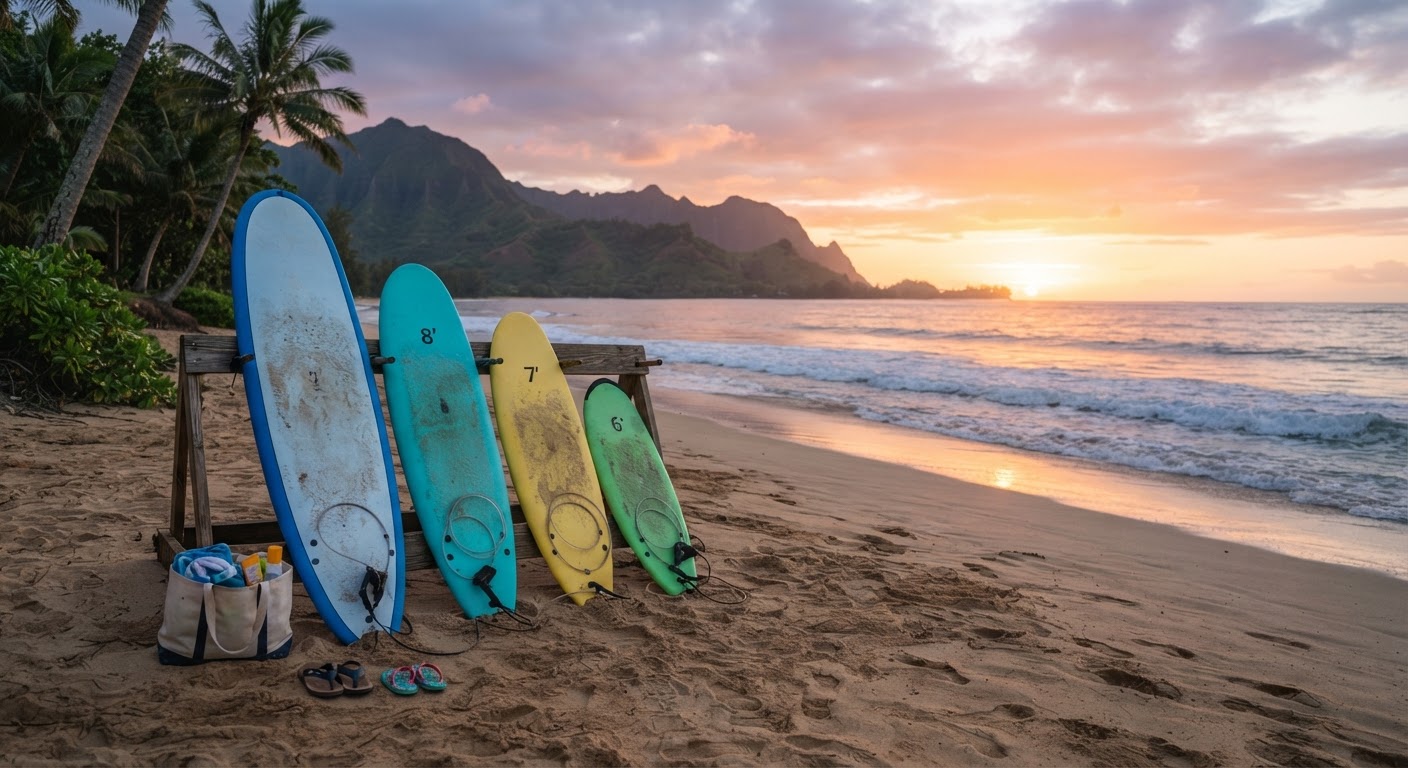
- Surfboards or boogie boards: Rent locally ($15-25/day) or bring soft-top boards if you have vehicle space. For first-timers, we recommend 7-8 foot soft-top longboards that provide stability and safety
- Snorkel gear: If your chosen beach has reef access, bring age-appropriate masks and snorkels. Rental quality varies—owned gear ensures proper fit
- Beach toys for younger kids: Buckets, shovels, sand molds keep non-surfers engaged
- Waterproof action camera: Capture your kids' first waves—these become treasured family memories
Often-Forgotten Essentials
- Plastic bags for wet clothes and trash (leave no trace is crucial at state parks)
- Baby powder (removes sand from skin more effectively than water)
- Portable phone charger
- Cash for parking meters and tip for surf instructors
- Light jackets for sunset hours
Total estimated packing cost for a family of four (if purchasing new): $200-300. Most items are reusable for future trips, making the per-day cost minimal for subsequent beach days.
Step 4: Sequence Activities to Match Energy Levels and Conditions
The order in which you approach activities dramatically affects your family's experience. We've learned through coordinating countless family beach days that matching activities to natural energy curves and environmental conditions creates flow rather than friction.
Start with the most physically demanding activity—surfing—when kids have peak energy and conditions are optimal. Safe surfing beaches Hawaii kids can learn on typically offer best conditions in early morning: calmer winds, cleaner waves, fewer people competing for waves, and cooler temperatures that prevent early exhaustion. If you're working with surf instructors, they can provide undivided attention before their schedules fill with back-to-back lessons.
Transition to moderate activities during mid-morning: free swimming, boogie boarding, or beach games that keep kids active but don't require intense instruction or focus. This is when spontaneous joy happens—kids invent games, make friends with other beach families, and develop their own relationship with the ocean.
Schedule low-energy activities during midday heat: lunch, reading, sandcastle building in the shade, or quiet water play in the shallows. Fighting this natural energy dip leads to crankiness and arguments. Embrace it as family downtime.
Offer a second wind opportunity in mid-afternoon: another surf session for kids who want more, snorkeling exploration for those seeking something new, or a beach walk for families who want to explore beyond your setup area. This flexibility accommodates different energy recovery rates—some kids bounce back quickly, others need the full day to recharge.
Close with low-key connection: sunset watching, reflection on favorite moments, or a gentle final swim. This creates emotional closure to the experience and helps transition toward evening routines.
Step 5: Budget Your Beach Day—Real Cost Breakdown
Transparency about costs helps families plan confidently. Here's a realistic budget breakdown for a family of four (two adults, two children ages 8-12) spending a full day at a Hawaii state park beach:
Fixed Costs:
- Parking: $5-10
- Surfboard rentals (if needed): $60-100 for four boards
- Surf lesson for kids (optional but recommended for first-timers): $80-120 for group lesson, $150-200 for private family lesson
Variable Costs:
- Food and beverages (if not packed from accommodation): $40-60
- Sunscreen and supplies (if purchasing at beach): $30-50
- Equipment you don't own: $50-100 for items like canopy, cooler, snorkel gear
Budget-Conscious Approach: $75-130 total (parking + rentals + packed food)
Moderate Approach: $200-300 total (includes surf lesson and some purchased supplies)
Premium Approach: $400-500 total (private surf instruction, equipment purchases, convenience food)
The beauty of Hawaii state park beaches is that the experience itself—pristine sand, world-class waves, stunning scenery—costs nothing. Your investment goes toward instruction, convenience, and equipment that enhances safety and enjoyment.
Safety Protocols for First-Time Families on Hawaiian Beaches
Safety isn't about fear—it's about informed confidence. When families understand ocean conditions and follow proven protocols, they can relax and enjoy rather than worry constantly.
Before entering the water: Spend 10 minutes observing wave patterns. Waves come in sets—typically 5-7 waves followed by a lull. Watch where waves break, identify any rip currents (channels of churning water moving away from shore), and note where other swimmers and surfers are positioned.
Establish clear boundaries: For non-swimmers or weak swimmers, the rule is water no deeper than waist-height. For confident swimmers, stay within the designated swimming area marked by buoys. For surfers, beginners stay in the white water (already broken waves) until they can consistently stand up.
Buddy system always: No one swims or surfs alone. Pair kids together or with an adult. Rotate supervision so one parent is always watching from shore with clear sight lines.
Rip current protocol: If caught in a rip current, don't panic or swim against it. Swim parallel to shore until you're out of the current, then angle back toward the beach. Teach this to kids before they enter the water.
Marine life awareness: Portuguese man-o-war, jellyfish, and sea urchins appear seasonally. Check with lifeguards about current conditions. If stung by jellyfish, rinse with vinegar (many lifeguard stations stock it) and seek medical attention for severe reactions.
Sun exposure limits: Even with sunscreen, limit direct sun exposure to 20-30 minute intervals, especially for children. Seek shade regularly, and watch for signs of heat exhaustion: excessive fatigue, dizziness, nausea, or confusion.
Conclusion: Your Framework for Stress-Free Hawaiian Beach Days
Planning your first Hawaii state park beach day doesn't have to be overwhelming. By following this proven framework—choosing safe surfing beaches Hawaii kids can actually learn on, timing your activities to match energy levels and conditions, packing strategically, and budgeting realistically—you transform anxiety into excitement. At Hawai'i State Parks, we've seen hundreds of families arrive uncertain and leave with sunburned smiles and stories they'll retell for years.
The key is preparation that creates flexibility. When you've handled the logistics in advance, you're free to be present for the magical moments: your daughter standing up on her first wave, your son discovering a hermit crab in a tide pool, the whole family watching the sun melt into the Pacific while your feet rest in warm sand. That's the Hawaiian beach experience you've been dreaming about—and now you have the roadmap to make it real.
Start with one beach day using this itinerary. You'll quickly develop your own rhythm and preferences, adapting the framework to your family's unique needs. Before long, you won't need a guide—you'll be the family other travelers watch and think, "They really know what they're doing." Because you will.